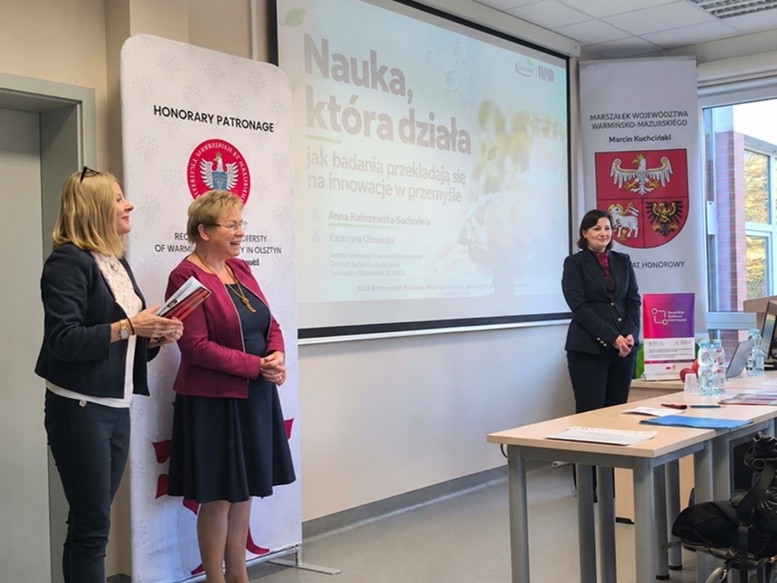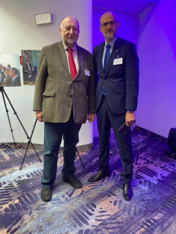
During the International Dairy Community Forum on September 9–10, 2026, in Białystok, Professor Andrzej Babuchowski, President of IIPM, met with Mr. Rolandas Taraškevičius, Deputy Minister of Agriculture of Lithuania. The discussion addressed key priorities to be tackled by the upcoming Lithuanian Presidency of the Council of the European Union. The exchange of views focused on opportunities presented by the new CAP (Common Agricultural Policy) for the dairy sector. While dairy farmers and milk producers appear well-protected, the dairy processing industry may need to seek funding from other EU instruments. However, everything remains open, particularly as the initial decisions in the form of legislative acts will begin publication in February 2027.
The President of IIPM held another meeting with Mr. John Alistair Clarke – Senior Research Fellow at Maastricht University and former Director for International Trade at the European Commission. The brief discussion covered the outlook for international trade, specifically in dairy products. The trade landscape is increasingly complex: multilateral agreements are progressively being superseded by bilateral pacts, which often take the form of regulatory cooperation rather than guaranteeing market access. Despite numerous agreements signed by the EU with third countries, their practical implementation faces significant headwinds.
Meeting with Mr. Pierre Bascou, Deputy Director-General for Markets and International Affairs – Directorate-General for Agriculture and Rural Development (DG AGRI), European Commission. The conversation centered on the development of the European dairy sector and its international positioning. Participants discussed support mechanisms for the industry under the CAP, including sector preparedness against increasingly frequent force majeure risks. Topics also included ensuring food security across EU Member States and a suite of emergency market and financial instruments designed to protect farmers from sharp income drops, market price collapses, and natural disaster impacts, including potential revisions to market intervention thresholds and private storage aid.