Bovine milk is an important source of biologically active compounds. Colostrum (bovine colostrum) is exceptionally rich in bioactive components, playing a crucial role in building immunity and safeguarding the body, not only in early life. Colostrum is the initial mammary secretion produced immediately postpartum and is characterized by elevated concentrations of antibodies, growth factors, and other biologically active compounds that support the development and functioning of the gastrointestinal and immune systems.
Key bioactive proteins in mammalian colostrum and milk include immunoglobulin G (IgG) and lactoferrin. The concentration of these proteins in milk varies considerably depending on the stage of lactation. The highest concentrations of both components are found in bovine colostrum, where IgG can account for up to 80% of total protein content, and lactoferrin reaches levels several times higher than in mature milk. In mature cow's milk, the concentrations of IgG and lactoferrin are significantly lower—around 0.5–1 g/L and 0.02–0.35 mg/mL, respectively—reflecting dynamic shifts in protein composition across the lactation cycle.
Immunoglobulin G (IgG) molecules are glycoproteins produced by plasma cells that specifically recognize and bind antigens present on bacteria and viruses, among others. Bovine IgG can interact with the human immune system on multiple levels: by directly binding pathogens, modulating intestinal barrier function, and influencing immune cell activity. Research indicates that bovine IgG (likely acting synergistically with other colostrum components) prevents bacterial translocation across the intestinal epithelium, modulates the expression of epithelial tight junction proteins (enhancing gut barrier integrity), and suppresses intestinal inflammation.
Another prominent whey protein with high biological activity is lactoferrin, which constitutes approximately 1% of total milk whey proteins. Lactoferrin exhibits antibacterial, antiviral, anti-inflammatory, antioxidant, and immunomodulatory properties. As a member of the transferrin family, lactoferrin displays a high affinity for iron ions; consequently, lactoferrin preparations are successfully utilized in treating iron-deficiency anemia. Its biological properties also encompass anticarcinogenic effects (tumor growth and metastasis inhibition have been demonstrated in animal models) as well as antioxidant action through free radical scavenging. Notably, lactoferrin is thermally labile. It undergoes denaturation at 90°C, whereas short-time pasteurization (75°C for 15 s) does not significantly affect its activity. UHT processing (135°C for 4 s) leads to complete protein denaturation and the loss of its biological functionality.
Bovine lactoferrin has been recognized as a safe food ingredient by both the European Union (Commission Implementing Regulation (EU) 2017/2470) and the US Food and Drug Administration (FDA). Maximum use levels for lactoferrin fortification in food matrices are regulated under EU law.
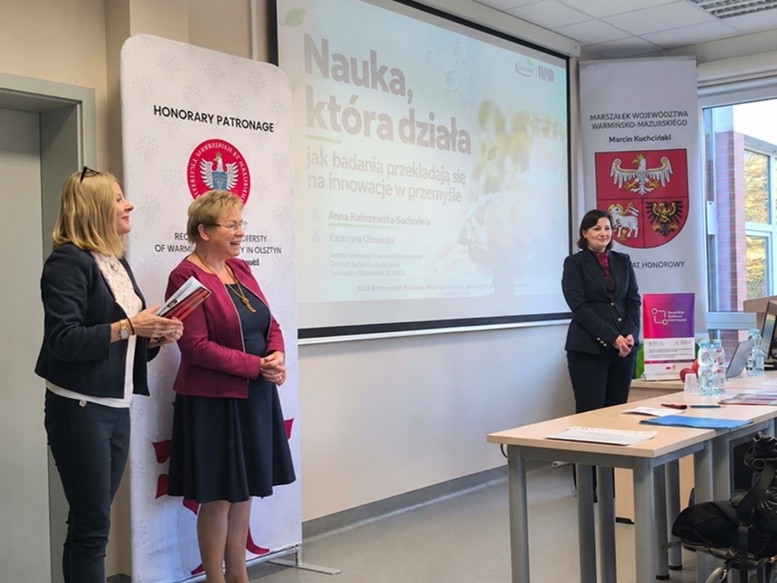
The distinctive biological properties of lactoferrin and colostrum preparations make these compounds an important focus of investigation in food science, dietetics, and medicine. Today, they are also widely utilized as active ingredients in functional foods and dietary supplements, elevating the demand for in-depth research into their molecular composition, biological activity, and potential health benefits for humans. For several years, the Dairy Industry Innovation Institute (IIPM) in Mrągowo has also been actively researching colostrum and exploring advanced methods for recovering biologically active proteins from dairy feedstocks.
To date, the Institute has developed preservation technologies for colostrum designed to maintain maximum bioactivity of its valuable constituents. Commercial colostrum products available on the Polish market were also thoroughly evaluated. The primary conclusion drawn from these investigations is that bovine colostrum is highly sensitive to elevated thermal processing, and commercial preparations exhibit notable variations in active ingredient concentration. This variability can stem from herd health status, feeding regimen, and, above all, the elapsed time post-calving (the shorter the interval, the richer the colostrum is in biologically active compounds), as well as downstream preservation handling.
The Institute also explored the viability of incorporating colostrum into health-promoting fermented beverages. The trials demonstrated that colostrum fortification exerted no adverse effects on fermentation kinetics or finished product texture. Furthermore, lactoferrin and IgG antibody levels remained remarkably stable throughout a 4-week storage period. The colostrum-formulated probiotic fermented beverage was showcased to attendees of the scientific conference "NUTRIBIOTA – Masterclass: Preparing the Patient and Their Microbiota for Hospital Stay" (Szczecin, June 3, 2023). The medical community received the product with enthusiasm, commending both the therapeutic merits of colostrum and the absence of any compromise in sensory quality.
Research conducted at IIPM additionally established that powdered whey protein concentrates (WPC) can serve as a substantial source of bioactive proteins (IgG and lactoferrin). It is critical, however, to handle cheese whey with specialized care post-cheese making to prevent the degradation and loss of these valuable bioactive qualities.
Another fascinating component of bovine milk is the macromolecular complex known as MFGM. The abbreviation MFGM stands for the milk fat globule membrane. MFGM occurs naturally in mammalian milk, including cow's milk. Fat in milk is enveloped in droplets enclosed by this specialized membrane, consisting primarily of bioactive polar lipids and membrane-specific proteins. In the Polish market, MFGM is predominantly known for its incorporation into infant and young child formulas. Clinical studies have demonstrated that MFGM or MFGM-fraction supplementation in pediatric cohorts is safe and promotes brain development, immune function, and intestinal health. Emerging clinical evidence on MFGM supplementation in adults also indicates antibacterial, antiviral, anticarcinogenic, lipid-lowering, and gut microbiota-modulating benefits. The primary industrial source for isolating MFGM fractions is buttermilk. Recent years have seen a sharp surge in scientific interest regarding the milk fat globule membrane. Accordingly, the Dairy Industry Innovation Institute conducted a series of investigations utilizing membrane separation technology to isolate buttermilk fractions enriched with this valuable component of bovine milk.
Owing to the presence of numerous valuable constituents (including the aforementioned immunoglobulin G, lactoferrin, and MFGM), milk represents an exceptional reservoir of bioactive compounds that support immunity, modulate intestinal function, and foster neurodevelopment. Given their multifaceted modes of action, ongoing research into the biological mechanisms and potential applications of these compounds in functional foods remains pivotal to advancing our understanding of how milk positively impacts the human body.
References:
Brandelli, A., Daroit, D. J., Folmer Correa, A. P. (2015). Whey as a source of peptides with remarkable biological activities. Food Research International, 73: 149-161 (doi: 10.1016/j.foodres.2015.01.016)
Hernández-Castellano L. E., A. M. Almeida, N. Castro, A. Argüello. 2014. The colostrum proteome, ruminant nutrition and immunity: a review. Current Protein and Peptide Science 15: 64–74 (doi: 10.2174/1389203715666140221124622).
McGrath, B. A., Fox, P. F., McSweeney, P. L., Kelly, A. L. (2016). Composition and properties of bovine colostrum: a review. Dairy Science & Technology, 96: 133-158 (doi: 10.1007/s13594-015-0258-x)
Ostrowska, M., Brzozowski, B., Babuchowski, A., Adamczak, M. (2025). Biologically Active Components of Milk-Production and Properties of Lactoferrin. Processes, 13(6): 1620 (doi: 10.3390/pr13061620).
Playford, R. J. and Weiser, M. J. (2021). Bovine colostrum: its constituents and uses. Nutrients, 13(1): 265 (doi: 10.3390/nu13010265)
Vanderghem, C., Bodson, P., Danthine, S., Paquot, M., Deroanne, C., Blecked, C. (2010). Milk fat globule membrane and buttermilks: from composition to valorization. Biotechnol. Agron. Soc. Environ, 14(3), 485-500.